搜索





 Time:Apr 25, 2025
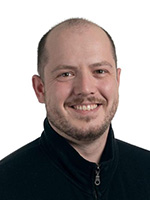 Presenter: Dr. Piotr Kot
Affiliation: Center for Quantum Nanoscience, Institute for Basic Science, Seoul, South Korea
Date: Friday, April 25, 10:30–11:30
Location: Building 4, Room 600, Zhangjiang Campus
Invited by: Associate Professor Yang Sheng
Biography
Piotr earned his Master's and PhD in Physics from the Max Planck Institute for Solid State Research in Germany and his Bachelor's degree from the University of British Columbia in Canada. During his PhD, he helped develop a state-of-the-art ESR-STM capable of probing energy scales three times higher than previously possible. Using this STM, he studied microwave radiation effects on tunneling between superconductors and explored coupling between electric fields in STM junctions and molecular spins. His findings reveal a new approach to controlling atomic spins, aiming to contribute to atomic-scale quantum computing. His interests also include spintronics and quantum information processing, especially in their combined applications.
Abstract
Electron Spin Resonance (ESR) spectroscopy is a powerful tool for studying unpaired electron systems, offering insights into reactions, materials, and electrochemistry. When integrated with Scanning Tunneling Microscopy (STM), ESR enables the atomic-scale study of individual spin systems. By placing two spins in close proximity, one can probe their exchange and dipolar interactions, revealing orbital overlap and environmental effects. This talk presents a study of on-surface exchange interactions among various spins on MgO/Ag(100). Results show distinct mechanisms: surface-mediated interactions in Ti dimers, orbital-dominated exchange in Sm atoms, and delocalized spin density in iron phthalocyanines. These findings offer new insights into atomic-scale spin interactions and the diversity of exchange phenomena.
Research Centers
Research Capacity
m² Total Area
Building Complexes

沪交ICP备201251287 Copyright © 2025 ZIAS
 Address:No.1308 Keyuan Road, Pudong District, Shanghai
 Phone:86-21-54740000
 E-mail:zias@sjtu.edu.cn
